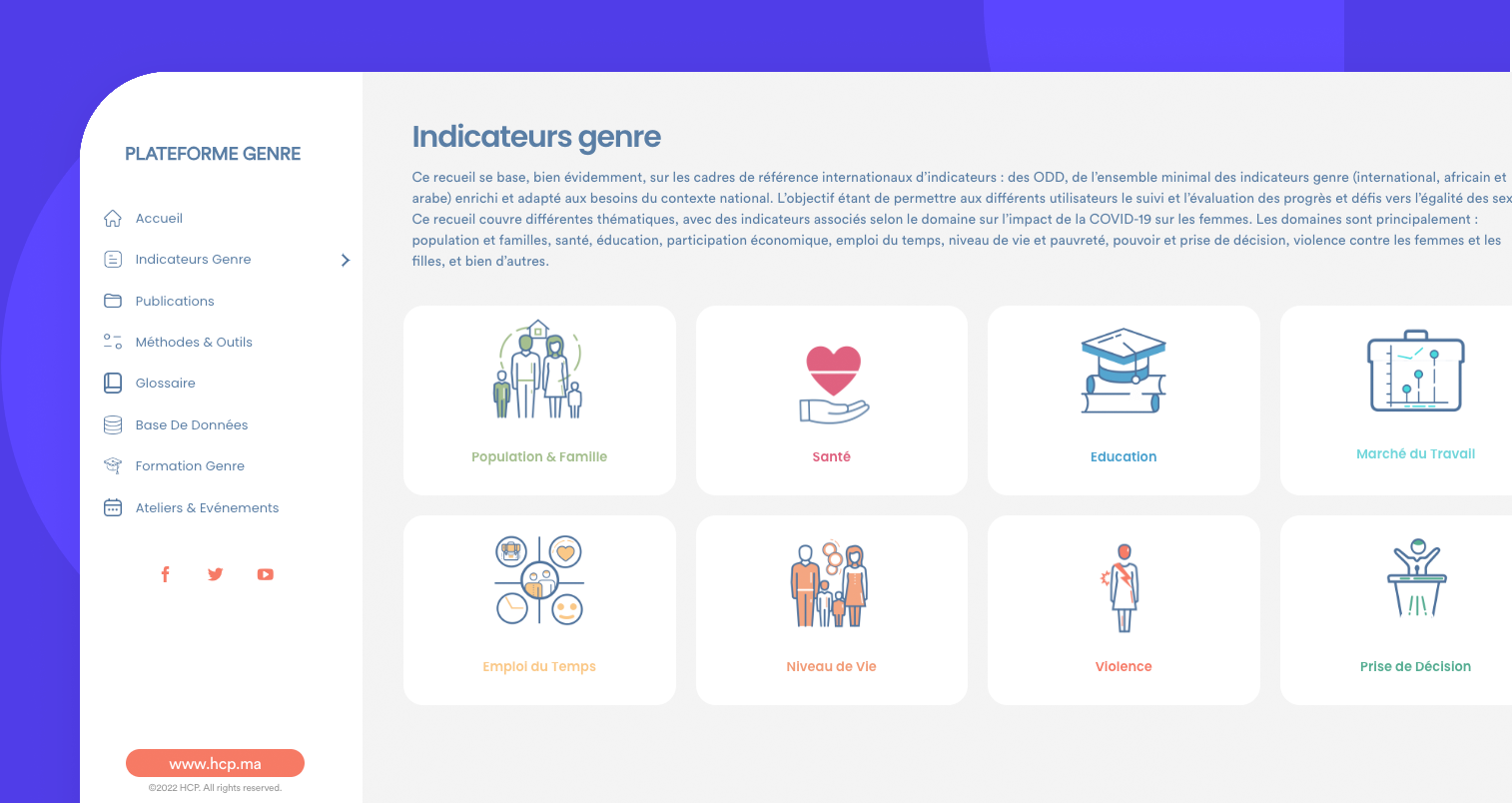
Gender Platform
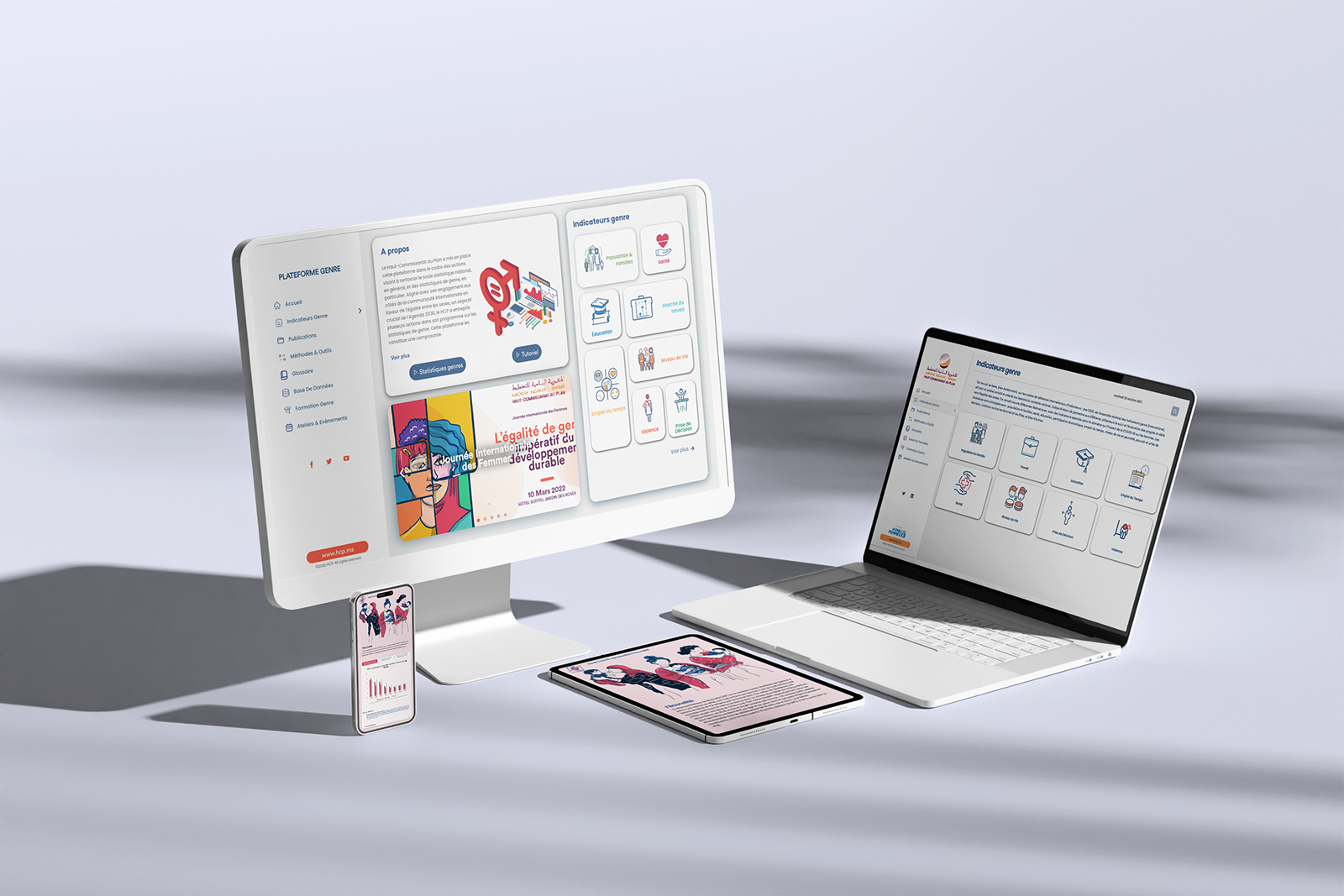
INTRODUCTION
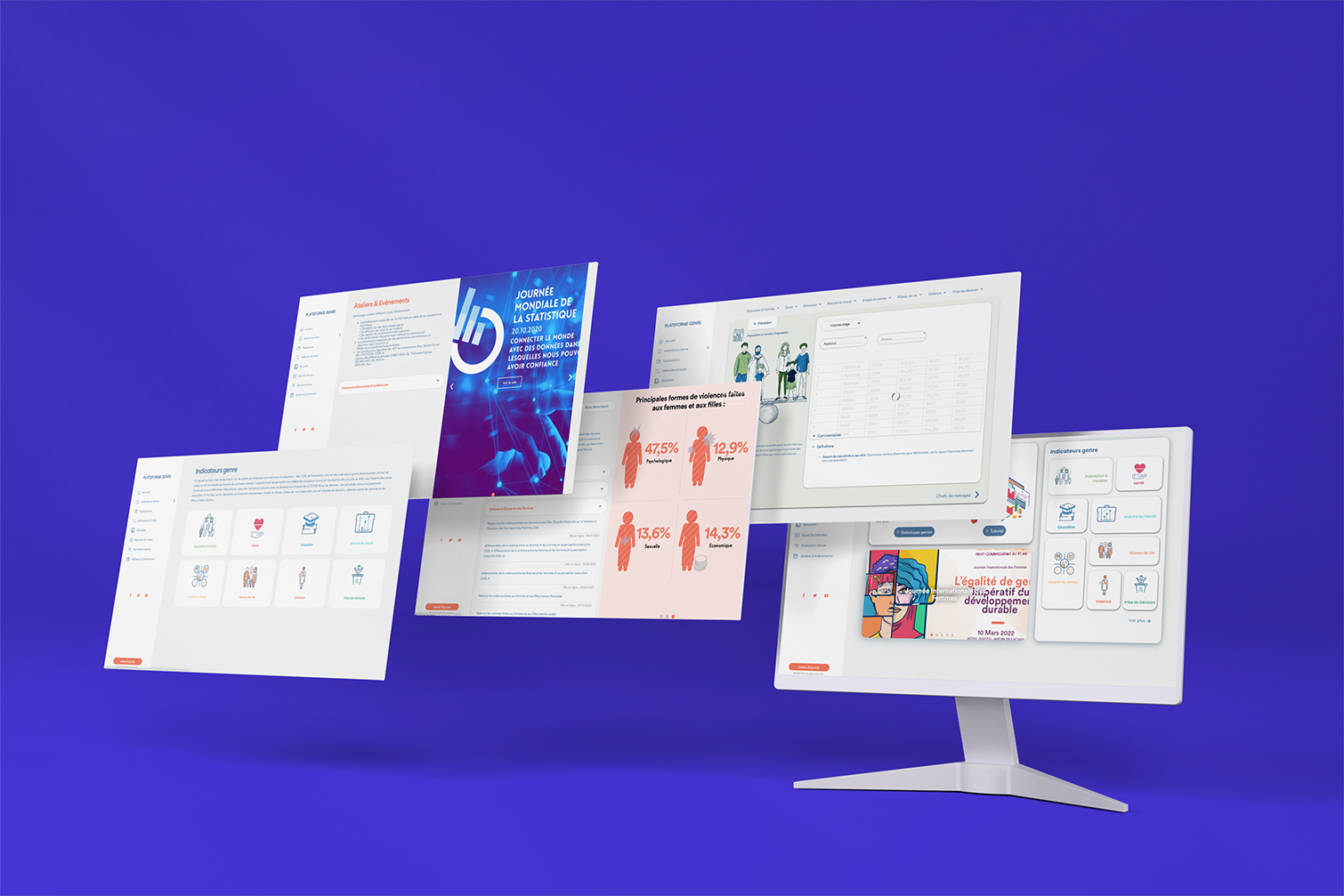
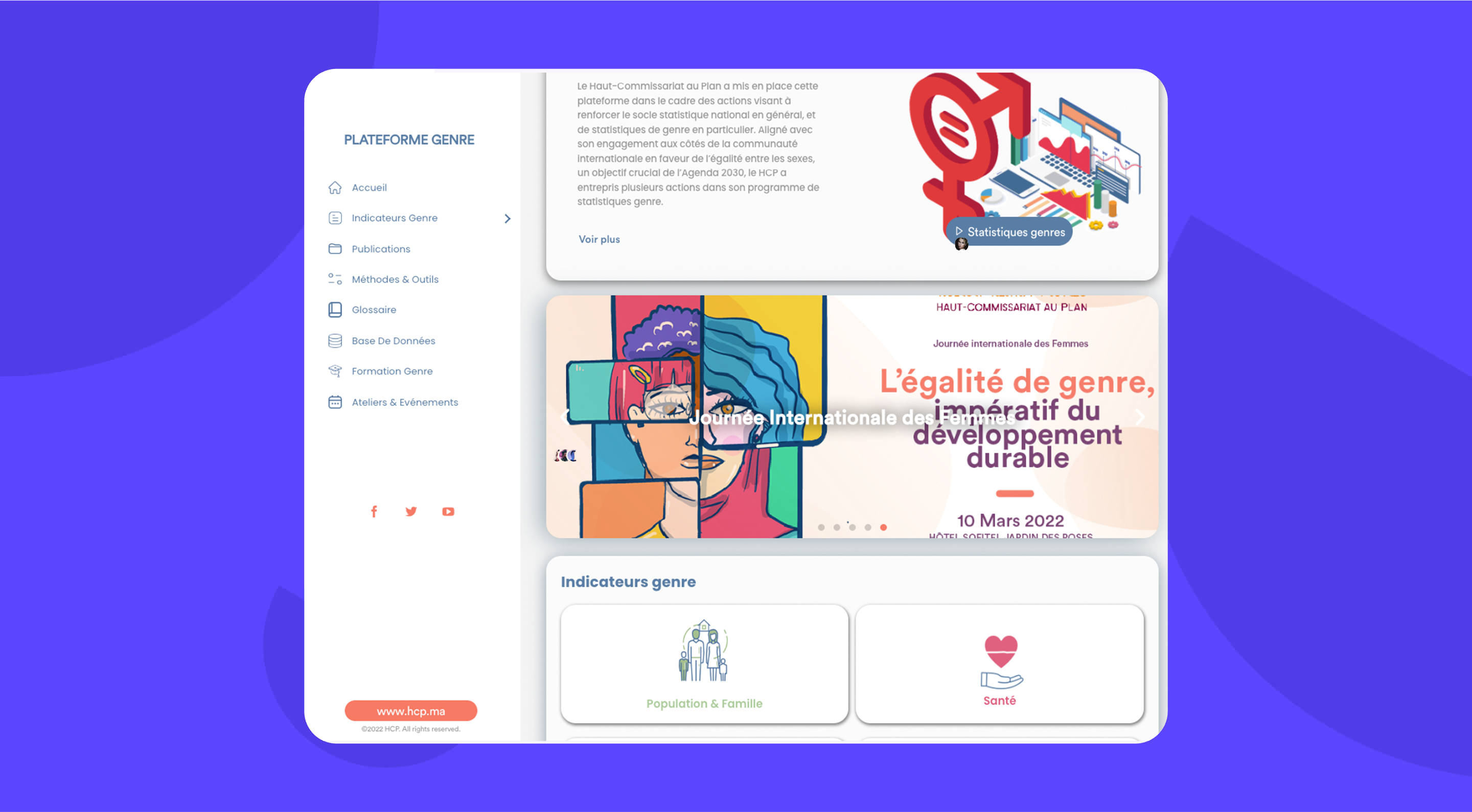
Our tech agency was approached with a unique challenge: designing and developing a responsive web application for the Gender Statistics department. The platform aimed to present gender statistics in an easily accessible, understandable, and interactive manner.
THE TEAM
Our project team was a diverse group led by a Staff UX Designer, and included a UX Designer, two Developers, and a Motion Designer.
PROCESS
- Research and User Personas
- Wireframes and Prototyping
- Usability Studies
- Design and Development
- Launch and Iteration
- Training and Handover Phase
WHAT IS PURPOSE OF GENDER STATISTICS?
UNDERSTANDING GENDER STATISTICS
The process kicked off with several workshops and meetings to develop a deep understanding of gender statistics – their meaning, implications, and relevance. The team liaised with experts in the field and examined existing resources to understand the landscape thoroughly.
Research and User Personas Phase
Our initial stage involved intensive research and user persona creation. To gain an accurate understanding of our users' needs, motivations, and frustrations, we interviewed potential users, such as statisticians, researchers, policy makers, and non-profit organizations. Some of the questions we asked were:
- "What tools or resources do you currently use to find gender statistics?"
- "What challenges do you encounter when accessing or using gender statistics?"
- "How often do you use gender statistics in your work, and in what capacity?"
- "What features would you find most helpful in a web application dedicated to gender statistics?"

From these interviews, we were able to identify common pain points and create detailed user personas, complete with problem statements and user journeys. For instance, users often noted difficulty in finding specific data, understanding the data, and a lack of personalization:
"I'm really struggling to find the information I need. I have to go to several different websites and it's incredibly time-consuming"
"I'm often not sure what the data I'm looking at really means. There are graphs and charts but not a lot of explanation. It would be great if there was more context provided."
"I feel like the platform could be a lot more personalized. Right now, I can't really tailor it to my needs, like saving my searches or creating custom reports. This would really help me in my work."
WIREFRAMES AND PROTOTYPING PHASE
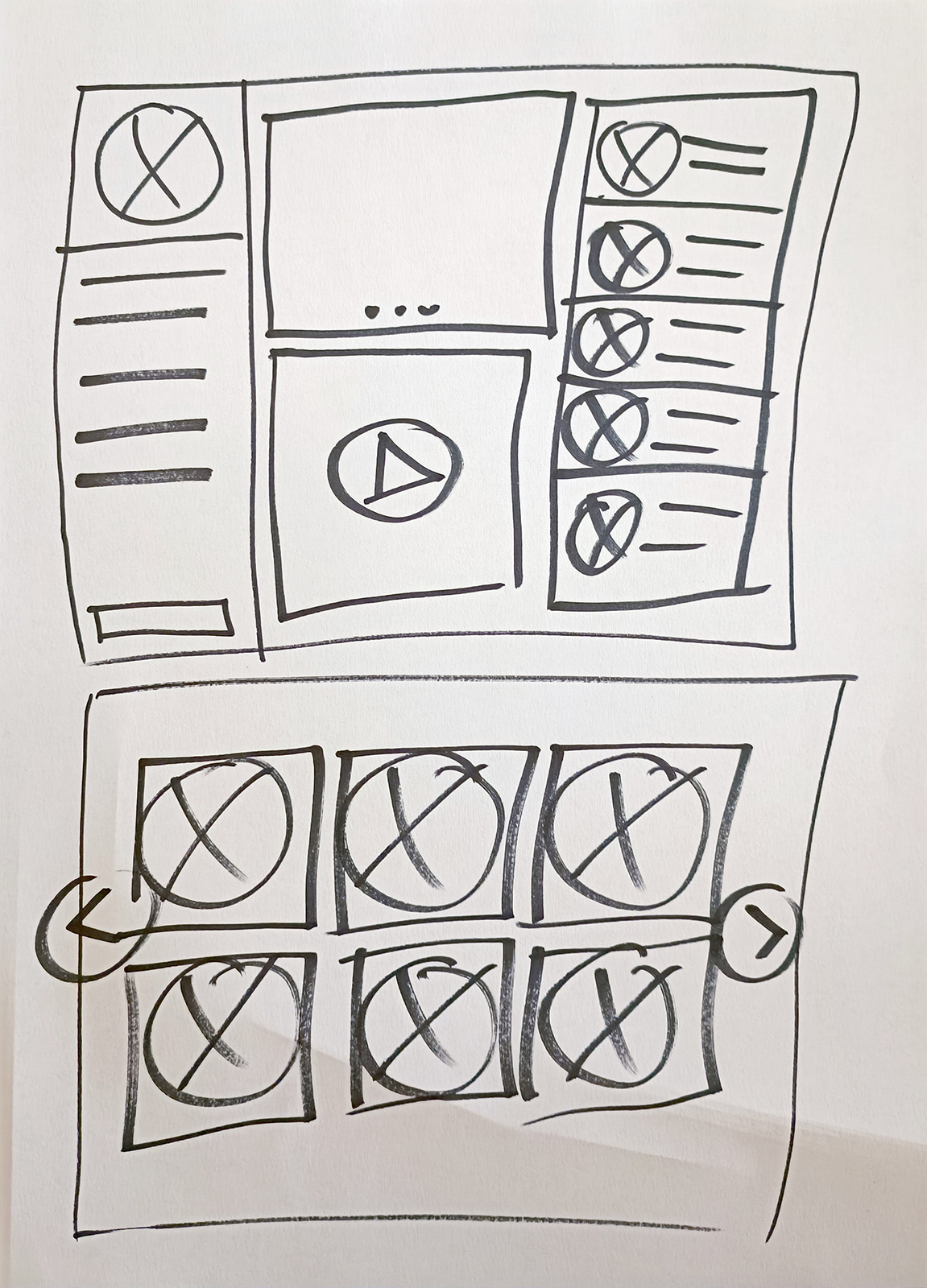
Following the creation of user personas, the team moved into the wireframing and prototyping phase. The aim here was to provide a skeletal framework of the platform, which later evolved into a functional prototype. This prototype was then tested with a select group of users that represented our defined personas, ensuring that the application was user-friendly and addressed the pain points identified during our initial research.



USABILITY STUDIES PHASE
Next came the usability studies, which were conducted during the prototype phase to identify potential issues and areas for improvement. Various testing methods were employed, including moderated and unmoderated user testing, A/B testing, and remote user testing. Feedback from these studies further informed the refinement of the prototype.Users were observed performing tasks on the platform and were asked questions such as:
- How easy was it to find the information you were looking for?"
- "Did you find the data presented understandable?"
- "Were you able to customize the platform to your needs?"

"I really like the customization options. But I'd love if there was even more flexibility."
Some of the user feedback included:
- "The website loads a bit slow sometimes. This can be frustrating when I'm in a hurry."
- "While the search feature has improved, I still have some trouble finding certain data."
- "The data is much easier to understand now, but I think there could still be some improvements."
- "I really like the customization options. But I'd love if there was even more flexibility."
DESIGN AND DEVELOPMENT PHASE
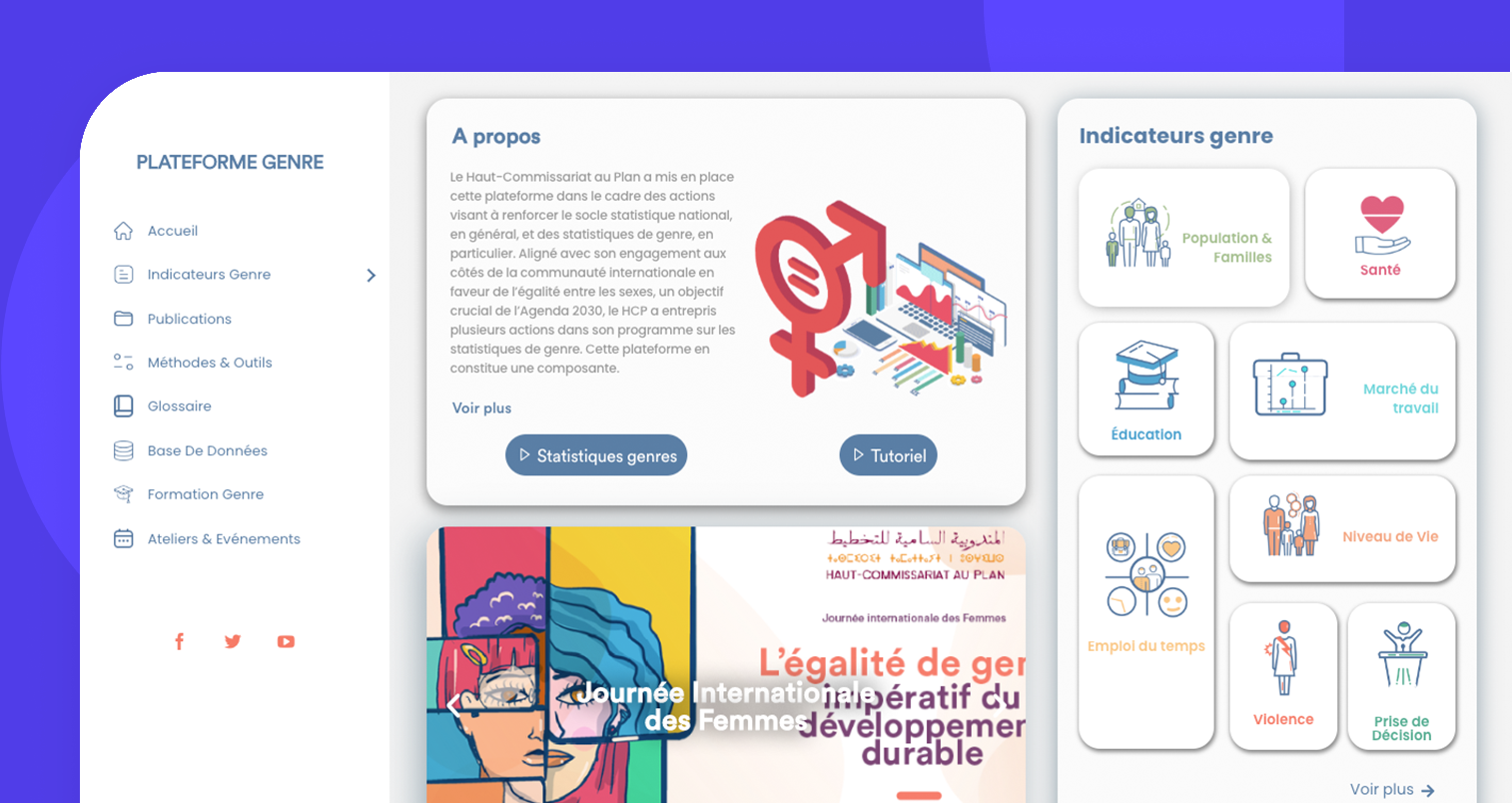
Post usability studies, the design and development phase began. Our UX designer and motion designer collaborated to create an engaging, intuitive, and visually appealing interface, while our developers ensured the platform's functionality, performance, and responsiveness. The motion designer's work played a critical role in making complex statistics digestible and approachable for users.




TRAINING AND HANDOVER PHASE
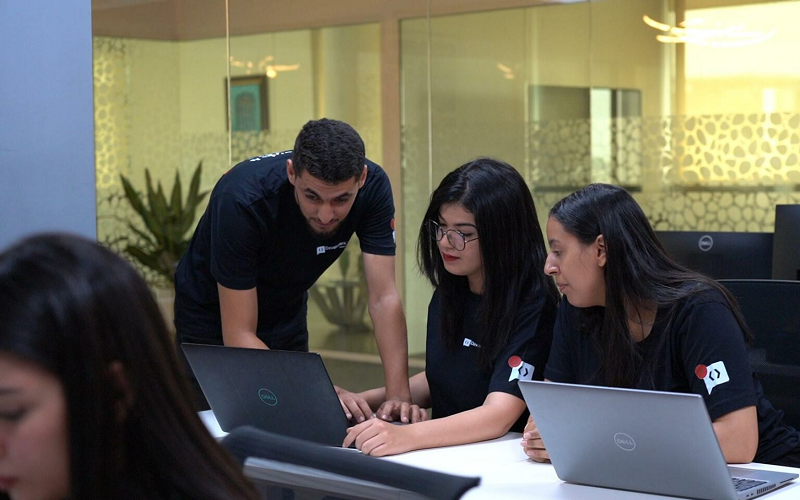
Upon the completion of the development phase and before the official launch, we organized a comprehensive two-day training for the Gender Statistics department. The purpose of this training was to equip the team with the necessary skills and knowledge to manage and maintain the web application independently. This included tutorials on managing content, interpreting user data, troubleshooting common issues, and updating the platform for continuous improvement. The training was interactive, hands-on, and tailored to accommodate different learning paces, ensuring a smooth handover process.
OUTCOME AND LESSONS LEARNED
The project was a successful endeavor, with positive user feedback highlighting the platform's ease of use, improved data accessibility, and the valuable personalization features. There were also areas identified for improvement, primarily around data search capabilities and load times, which were addressed in subsequent iterations.
The handover training was positively received, with the Gender Statistics department expressing confidence in their ability to manage the platform independently.
Among the lessons learned, the importance of user-centered design and continuous user feedback stood out. Our iterative development process, supported by user interviews and usability studies, ensured that the product met real user needs and was capable of evolving based on user feedback. Another valuable takeaway was the significance of thorough training in empowering the client to feel confident and capable in managing the new platform independently, reinforcing the sustainability of the project.
The project underscored the power of collaboration, both within our multidisciplinary team and with our client, and confirmed the effectiveness of our user-centered design approach in creating digital solutions that truly resonate with their intended audience.